Kaushik Sharma
The Scroll That Stole Time
Interview with filmmaker Kaushik Sharma
The very first idea came from watching people around me. In cafés, public spaces, and places where people are supposed to connect, I kept seeing everyone glued to their phones. At first, I did not fully realise what I was observing. It stayed somewhere in my mind.
At that time, I was also trying hard to get work. I wanted to make a short YouTube video to show my editing skills. The first version was going to be a montage-style video with an upcoming model, shot inside malls early in the morning before the crowd came in. I wrote to a few malls in Guwahati asking for permission. I told them I would come with one actor and a small camera, and I would even credit them. None of them got back to me.
Then I thought of shifting the shoot to the riverside. By the time I pitched the idea to the model, she had lost interest. So there were setbacks one after another. But I was not demoralised.
That is when I remembered Phillips Neog, a local actor I had met through a director friend. I had seen some of his earlier short films and liked his acting. I first asked him if he knew any actresses who might be interested. Then I thought, why not ask Phillips himself to play the role? The first draft was written with a female character in mind, but he asked if I would be okay changing it to a male voice. I said yes.
That became the real beginning of the film.
At first, it was still small in my head. A YouTube video. A visual piece. But when Phillips suggested adding a twist, I started thinking more seriously like a screenwriter. I also kept my editing rhythm in mind from the beginning.
I knew I did not want to make a romantic short film, a simple drama, or a moral-message film. I wanted to break away from some of the usual local and Bollywood-style tropes. I wanted to make something more strange, reflective, and modern.
A part of this also comes from my father, who exposed me to Western films from a young age, especially spaghetti westerns like Bud Spencer and Terence Hill films and Sergio Leone’s Dollars trilogy. Those films stayed with me in some way.
-The film takes place in the streets and landscapes of Guwahati. What does this city mean to you?
I was born and brought up in Guwahati. For me, it used to be a lazy, laid-back city with a huge river running by its side. I have memories of hanging out with school friends in public buses, visiting small eateries, sitting and chatting for hours. Those are golden memories for me.
But in the last 10 to 12 years, the city has changed very fast. The old rock and roll feeling of Guwahati has slowly been taken over by electronic sounds, traffic, construction, bridges, buildings, cars, buses, and people rushing everywhere. Sometimes I feel I do not recognise the city in the same way anymore.
Still, there are places where the old charm remains. Some corners still feel like the Guwahati of the 90s and early 2000s. I wanted to capture a little bit of that. I hope older viewers from the city can feel some nostalgia when they watch the film.
-How was the casting of actor Phillips Neog? What were you looking for in him?
Initially, this was supposed to be a YouTube video. But as the script grew, I wanted the performance to be more subdued and internal.
One film that inspired me visually and emotionally was Wong Kar-wai’s Chungking Express. Phillips had not seen the film, and I had never really directed an actor before. So I was also learning while doing.
I started by giving him keywords and talking to him in a way that could bring out the feeling I wanted in that moment. I do not know if this method will work with every actor, but with Phillips, it became a good starting point.
The character Aarav did not need to over-dramatise his emotions. The film was about a person slowly getting consumed by his phone and his own inner disconnection. So I wanted Phillips to keep things quiet, restrained, and human.
-Besides directing, you were also the cinematographer. What camera did you use and why?
I wanted a camera that was affordable but still strong for video, with decent lens support and good image quality. This was the camera I owned, along with my Sigma lenses: 16-28mm, 24-70mm, and 100-400mm.
Before this short film, I had used the camera for some music festival work, local tourism-related work, and a few of my own experiments. I chose it mainly for its video capabilities, but I also liked that it could take good photographs.
The camera can also do external RAW recording, which gives higher-quality footage for colour grading. I do not own an external recorder yet, but maybe I will get one for future film projects.
– The film has claustrophobic interior scenes with artificial colours, as well as exterior shots of nature. How were the locations selected, and why did you film in Chandrapur?
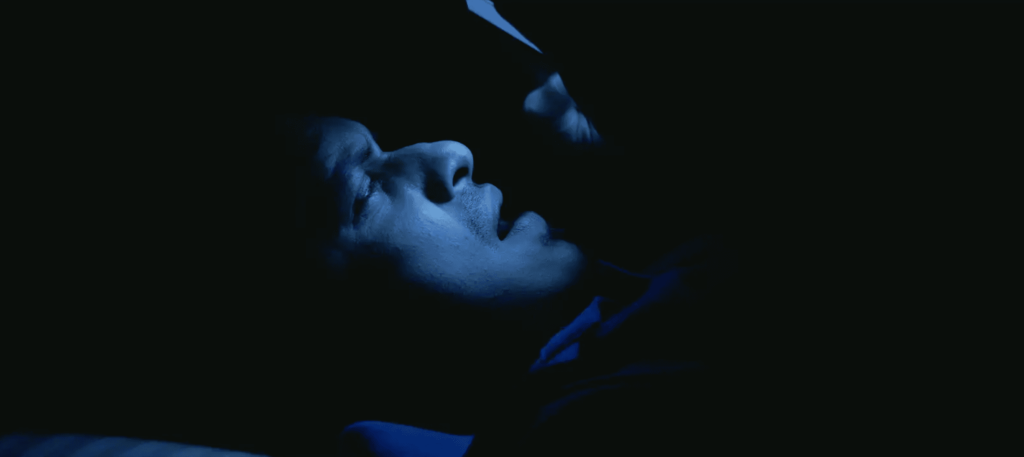
The film has several claustrophobic interior scenes: the bed scene, bathroom brushing scene, breakfast table, tying shoelaces, the Zoom call, the pub, and the café.
I wanted those interior scenes to feel slightly uneasy. The colour grade, shot composition, and music were designed to make the audience feel trapped inside Aarav’s digital routine.
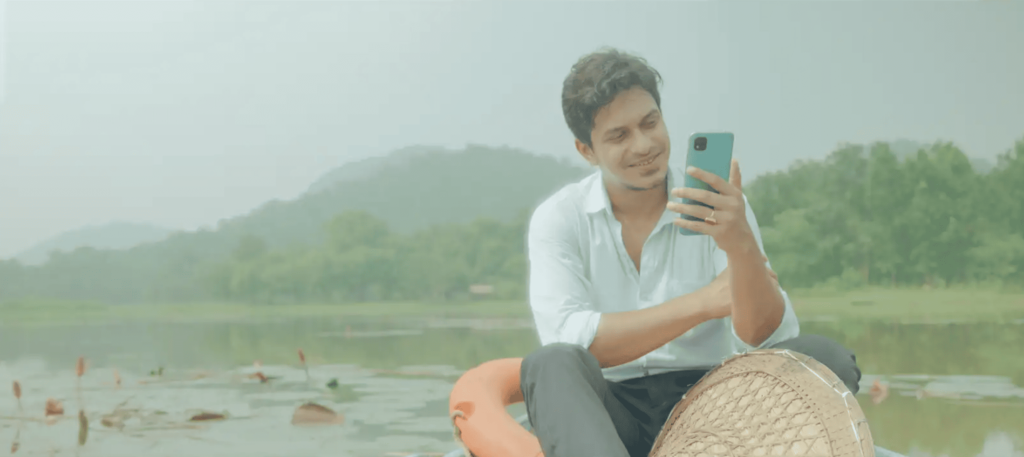
The exterior scenes were meant to let the audience breathe. The boat scene is dream-like. The Chandrapur riverside scene is more reflective. The market scene is intentionally choppy and restless.
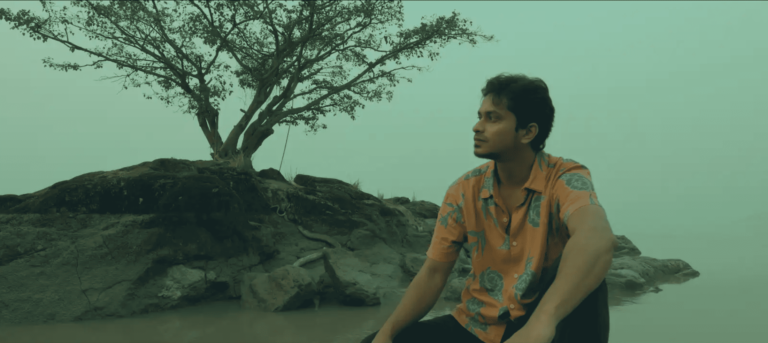
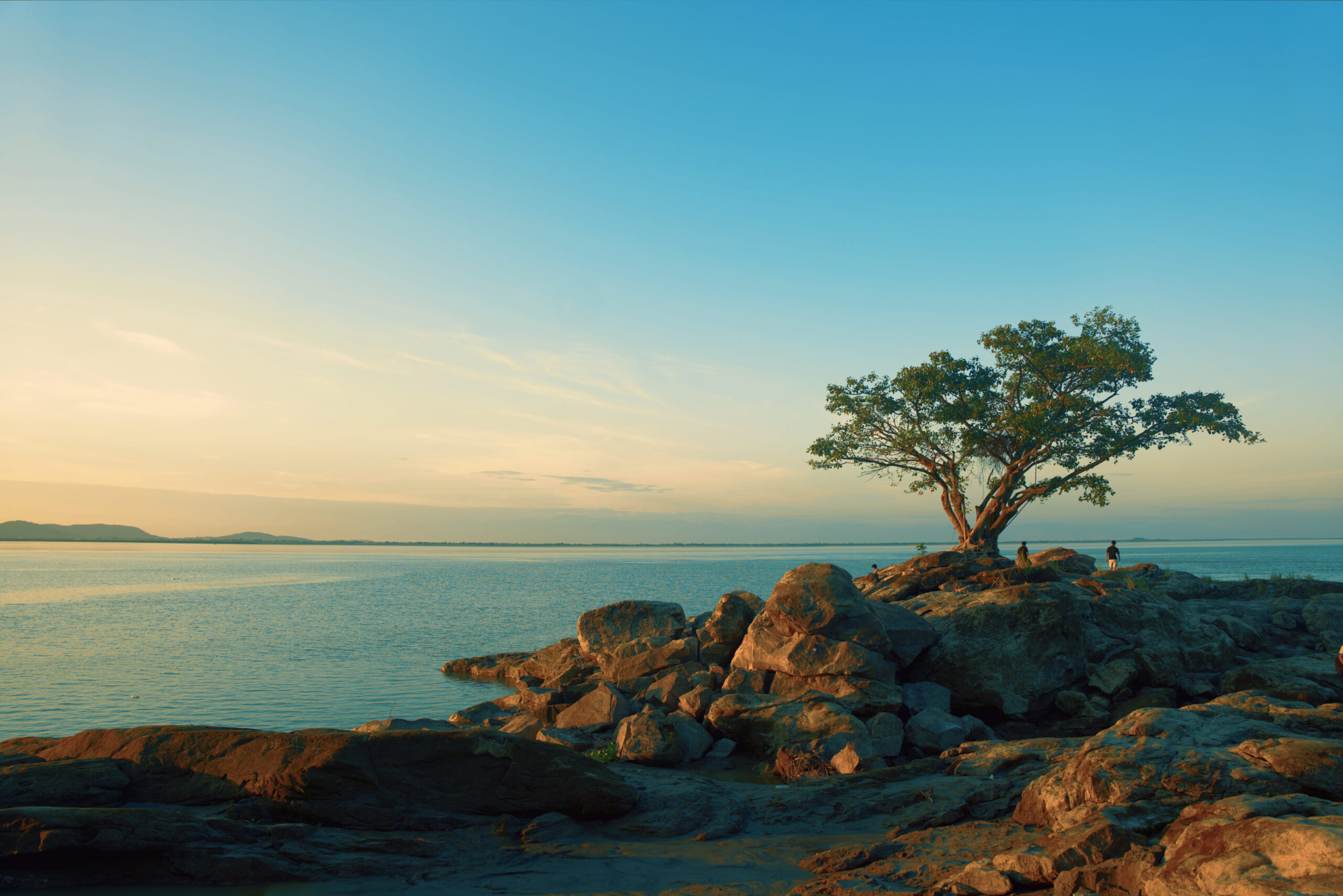
Chandrapur was chosen because of its calm presence and its beautiful location. A lot of people visit this place for its tranquility. There is a tree just off the banks of the river, and I saw it almost like a metaphor for rest, reflection, and an ancient guardian. The water nearby also added to that feeling.
The colour grade was also intentional. I reduced saturation in many parts of the film to show a drained world. In the post-credit scene, I increased saturation and vibrance to give Aarav a more altered, almost Terminator or Matrix-like feeling. I was a bit afraid it might come out too on the nose, but that was the idea.
-Do you have any anecdotes from the filming? Which sequence was the most difficult to film?
There were many difficult scenes: the boat scene, Chandrapur, the pub, the café, the market, and the Zoom call.
The pub and café scenes were mostly about getting permission on the spot. The managers saw my gear, so I had to politely explain that we would not take much time or disturb anyone. We ordered something first, then requested permission. Luckily, it worked.
The boat scene was interesting because Phillips was reluctant to get on a boat in the middle of the lake. He had told me earlier that he might not do it. But he still came to the location, so half the battle was won.
I went to the ticket counter and told them I was filming a scene and safety was very important. I asked for a strong boatman with swimming skills. They gave us a good boatman, life vests, and a rescue rope. Once Phillips saw the preparation, he slowly became more comfortable. I asked him to feel the boat, choose the one he liked, and ease into it. Finally, we got the scene.
The Chandrapur scene also had a challenge. It was a weekend, and many photographers and models were already shooting there with lights, reflectors, and makeup artists. It was crowded. I was expecting a beautiful golden-hour sunset, but it became cloudy.
Phillips was wearing a blue shirt, and I was wearing an orange one. Just before filming, I swapped shirts with him because the orange worked better for the scene. His shirt was too tight for me, but I had to manage. I did not want to film him topless in public. That would have been a different film altogether.
Because the space was crowded, Phillips had to sit on a tiny rock. He later told me it cramped his legs. But visually, it worked. I used my wide lens, and the limitation actually helped the scene.
The market scene was probably the hardest technically. The weather looked bad that day, and I was almost going to cancel. My mother noticed I was unsure and encouraged me to go anyway. So I went.
I purposely left my storyboard and shot breakdown at home and shot the scene fully on instinct. Since it was a busy market, I went almost guerrilla style. I walked backwards while filming Phillips walking towards me. I had to keep him in frame, avoid bumping into people, avoid shaking the camera too much, and not disturb vendors or shoppers.
It was stressful, but I did not panic. I focused on Aarav, his movement, and the feeling of the scene. In the end, I think the market’s chaos helped the film.
Another interesting scene was the Zoom call scene, which was shot inside my editing studio. I may make a separate Instagram post about that scene.
-How did the idea of filming a beer’s POV come about?
That was me having a little fun with film-school-style ideas. Many student films have alarm clock shots, waking-up shots, and object POV shots. So I thought, why not do a beer’s POV?
It was a small playful homage, but also a way to make the scene visually different.
-The market sequence has a quasi-documentary feel. How did you plan it?
There was a plan at first, but a lot changed before the shoot. So I dropped the plan and went full guerrilla mode.
The market was alive, crowded, and unpredictable. I felt it would be better to react to what was happening instead of forcing a rigid shot list. That gave the scene its quasi-documentary feel.
-What was it like working with music from Epidemic Sound?
I had been using Epidemic Sound for a while, and I liked their library. But finding the right music for the film took time.
For each scene, I listened to many tracks and shortlisted three or four options. Then I tried them against the edit in different combinations. Since the film is only around 10 minutes, the music had to support the mood without taking over.
Eventually, I chose the tracks that felt right for the film. And yes, I had paid for the licences.
-What feeling or message do you hope to convey with the film’s ending?
When I showed the film to a small focus group, I liked that everyone had their own interpretation of the ending. That made me happy.
For me, the ending is not something I want to over-explain. It could be about addiction, algorithmic control, the impossibility of escape, or another version of the self taking over. I am open to what people take from it.
-Who is your favourite contemporary Indian filmmaker that you would recommend?
Anurag Kashyap.
I like that his work often feels raw, risky, and alive. He has a strong relationship with characters who are flawed, restless, and trapped in their own worlds.
-What are your future film projects?
I had an idea for a bigger film project last year. I had spoken to some of my circle from New Zealand to see if they would be interested in an ambitious concept film. At that time, everyone was in a different phase, so it did not happen.
Now, after this Short Essay Film award, I feel like bringing that project back. But I do not want to do it alone. I would like to meet like-minded filmmakers from different countries, including actors, screenwriters, dialogue writers, VFX artists, sound and music people, cinematographers, and editors.
Without revealing too much, the idea would mix a conventional story-driven narrative with an experimental side. It would take risks and challenge the viewer, but the execution has to be very precise. If it is not done properly, it could easily fall apart.
I hope I do not sound like Mr Nolan.
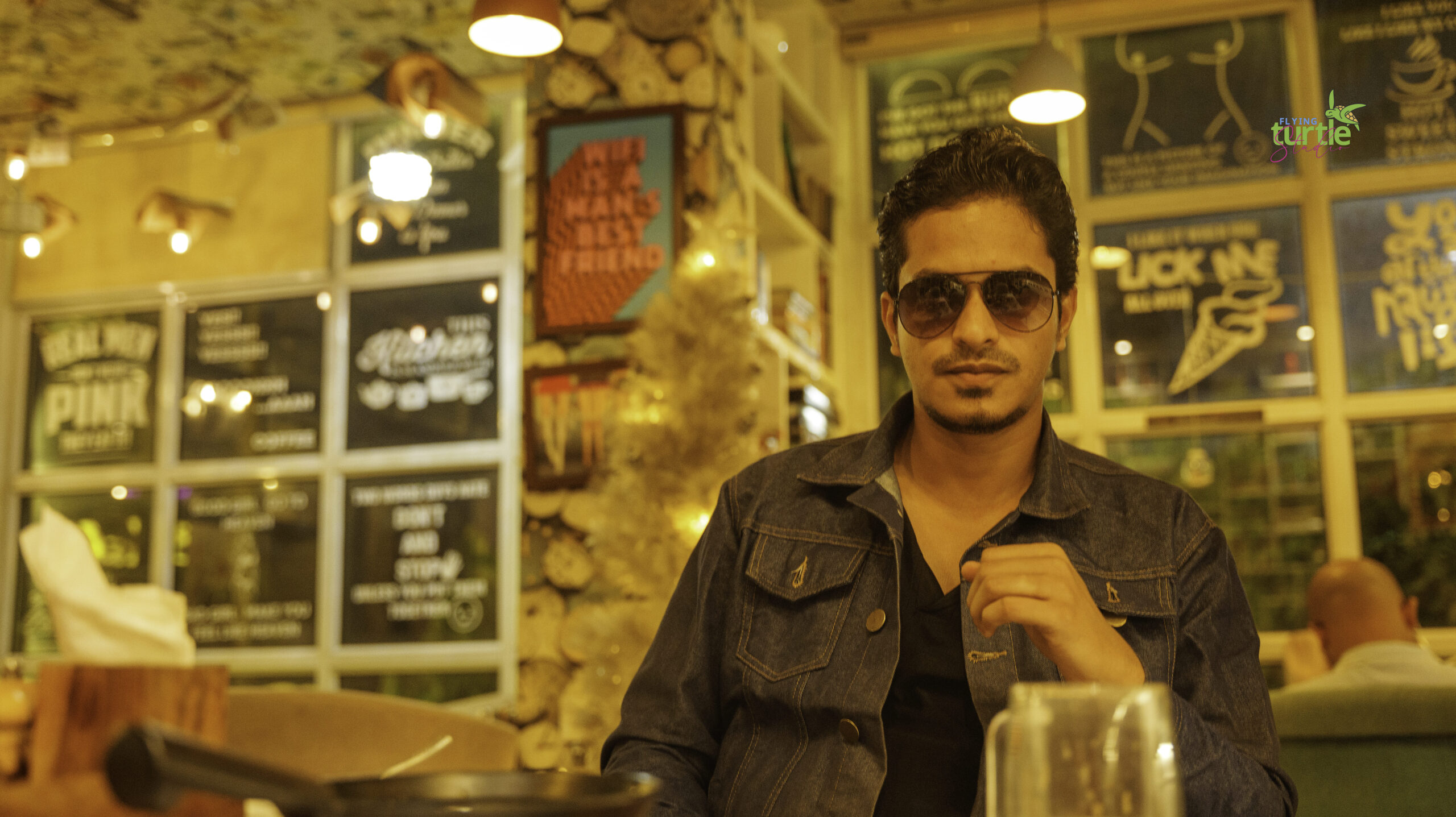
Kaushik Sharma | Biography, Movies & Facts
Kaushik Sharma is a filmmaker, video editor, cinematographer, and founder of Flying Turtle Studio, based in Guwahati, Assam, India. Born and raised by the Brahmaputra river, his work is shaped by the city’s old-world charm, changing rhythm, and the quiet emotional lives of people caught between memory and modern life.
He studied Film and Video Editing at Whistling Woods International, Mumbai, and later completed a Bachelor’s degree in Media Arts (Moving Images) at Wintec in Hamilton, New Zealand. With more than a decade of experience across films, documentaries, news, music videos, corporate work, weddings, shorts, and digital content, Kaushik brings the eye of an editor and the instinct of a storyteller to everything he makes.
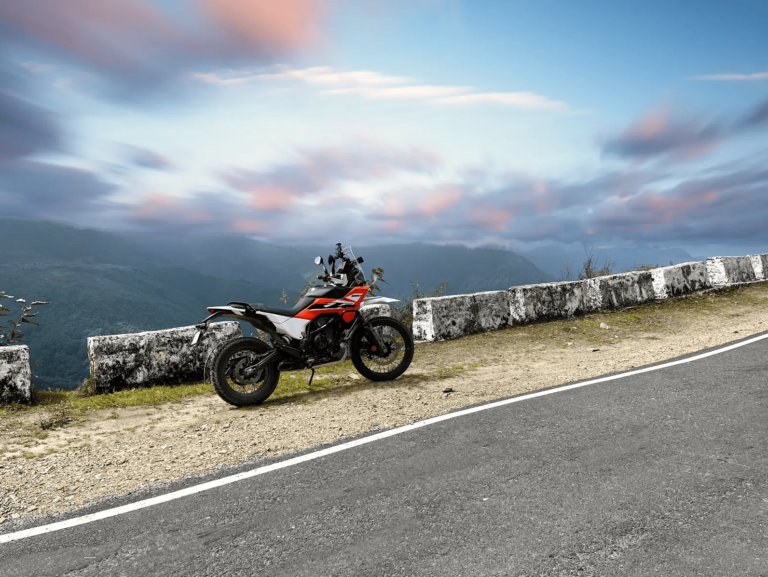
Beyond the edit room, Kaushik is a motorcycle rider. Selected as a rider-researcher for UNESCO and Royal Enfield’s The Great Himalayan Exploration, and often exploring on his KTM 390 Adventure motorcycle, he brings the patience of the road into his filmmaking, where place, rhythm, people, and lived texture quietly anchor the story.
His short film The Scroll That Stole Time began as a small visual idea about people glued to their phones and grew into a reflective essay film about technology, loneliness, attention, and the quiet loss of human connection. Written, directed, produced, shot, edited, sound-designed, and colour-graded by Kaushik himself, the film blends familiar Guwahati landscapes with an uneasy world shaped by screens and algorithms.
Drawn to silence, mood, rhythm, and stories where ordinary life slowly reveals something stranger underneath, Kaushik’s influences range from Wong Kar-wai’s visual melancholy to Sergio Leone’s bold cinematic world. The Scroll That Stole Time received the Best Essay Film Award in the Short Movies category at FICIMAD 2026, marking an important step in his journey from professional editor to independent filmmaker from Assam.