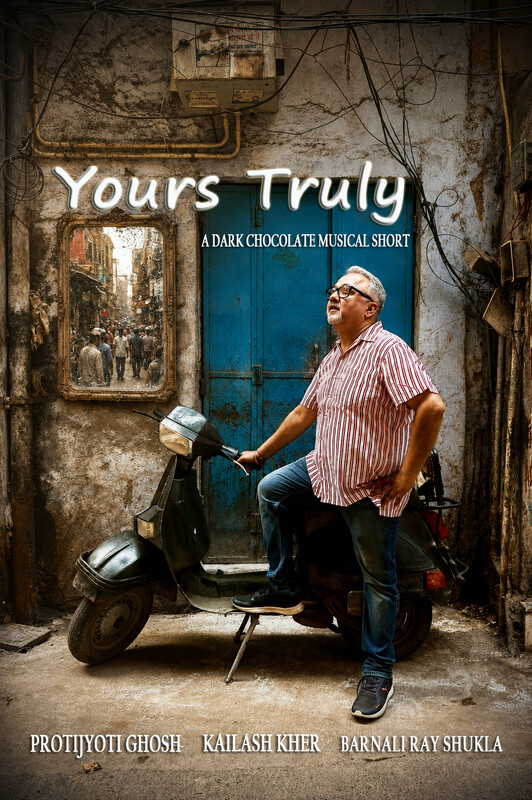
Barnali Ray Shukla
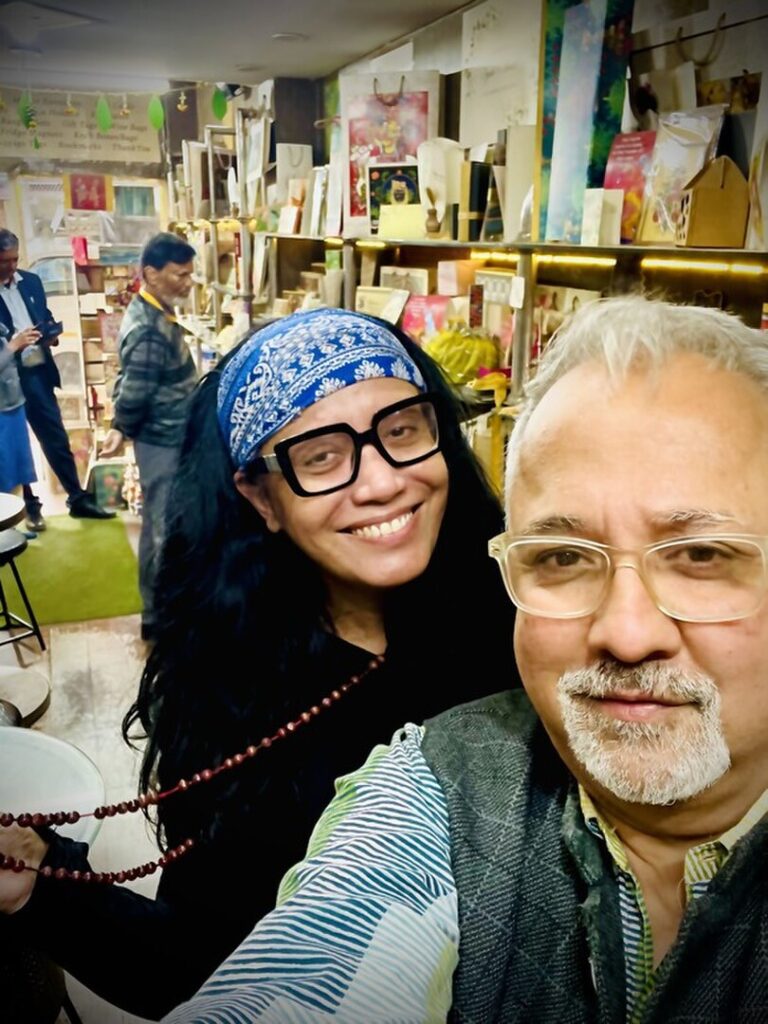
Interview with filmmaker Barnali Ray Shukla
It has been brewing, it was a choice to pursue it with intent only lately. I am fascinated by stories and stories that don’t necessarily reach us. I let them lie and see if they remain. This one did but no one came ahead to fund us. Not that I chased anyone or the foundations which would, I get restless once I know I have to make something. Also when funds come by the film doesn’t remain yours. Too many questions for too little that comes by. So I flew once I made up my mind.
As you know, independent films aren’t born with a silverspoon, if lucky some find recognition in film festivals and once that momentum gathers one sees the impact growing. Thanks to FICIMAD, I get to share here my side of the story.
-Was there a specific memory or moment that first inspired the film?
I happened to visit Old Delhi as a kid and it was all bunch of cables, knots, noise and tastes. But as I grew older I acquired a taste for all that we were beginning to lose. Analogue has its way of growing on you and I could never recover from the stories waiting to be shared.
So when in high school and later until now, I visited a classmate who runs a greetings card shop in Chawri Bazar. I liked the impossibly small spaces that lit up with the creations of the store and the stories he told me about his art, the craft of making cards, the changed scenario of online shares that killed the business and yet moving on with diversified ways of communication and his family, grandparents afflicted by the Partition of undivided India and then finding a foothold in Delhi.
That’s how it all began to take shape and now its here as Saath Tera. The bylanes and lanes don’t leave you. There are hundreds of stories of thousands of stores which started then. Have attempted to hold on the vibe down the memory lane, how far we are touching that chord we are yet to find out but its been amazing to find affection and an award in Madrid.
-How did you meet the singer Kailash Kher?
I met Kailash Kher around the time he had just arrived in Mumbai, then Bombay. At a common friend’s home, who is an actor himself, Mr Prashant Narayanan. In many of our dinners , at our own home or at or friends’ place , we have had the good fortune to the evening becoming a live music haven. Too much talent in the city, from every part of India. Kailash had sung until then with stalwarts, like Nusrat Fateh Ali Khan among others, but it wasn’t hard to note that here was a talent to reckon and he soon went on to sing for a movie, that was the breakout song and the country just welcomed his voice. Now his talent has got home so many awards that he has had to shift to a bigger house. (smiles)
-This film is filmed in the streets of Old Delhi , that is central to the film. What does this city mean to you? And now that you live and work out of Mumbai, what do these two cities mean to you personally?
Both the cities are global entities in their own right for the rest of the world, for me (like many others ) Delhi will remain the city which I associate with my growing up years. Time spent with my momma’s grandparents and cousins. The amazing food and the outings to museums, forts, ramparts from a time I would so like to take a time machine to and the winters in Delhi were particularly charming.
We as a nuclear family have lived across India but then from high school to the university days it was Delhi all the way. The best years of growing up has to be my years at college, Miranda House, and then post graduation years at the University of Delhi. I topped every year Tomaz, if the love for the city and what I did then , needs a proof of that commitment, maybe that’s what it was.
Its very unfortunate that in the last decade or more, Delhi hasn’t been remembered for what it can potentially be but the horrors that has been enraging the citizens for crime against women, attacks on their personal space, the increasing levels of air pollution, diminishing water levels among others.
I reached Mumbai on Valentine’s Day 1997. It has taken time but this megapolis has taken me in her folds now and by now am a true blue Mumbaikar. I am grateful for the adventures and opportunities this city and its people have given me.
However, its sad the way the city is being exploited. Environmental degradation is no more a chapter in a geography class in middle school, we see the bane of it each day, at every turn. This magnanimous city doesn’t deserve anything less than love from people in power, the people love it across seasons and pincodes. But this affection needs to be aligned with support from people in power , funds for its upkeep, space for all, good infrastructure. Mumbai is truly global in its outlook, but the vision ahead for it alas, doesn’t seem to be far reaching but just filling pockets of a few. Am sure tides will turn.
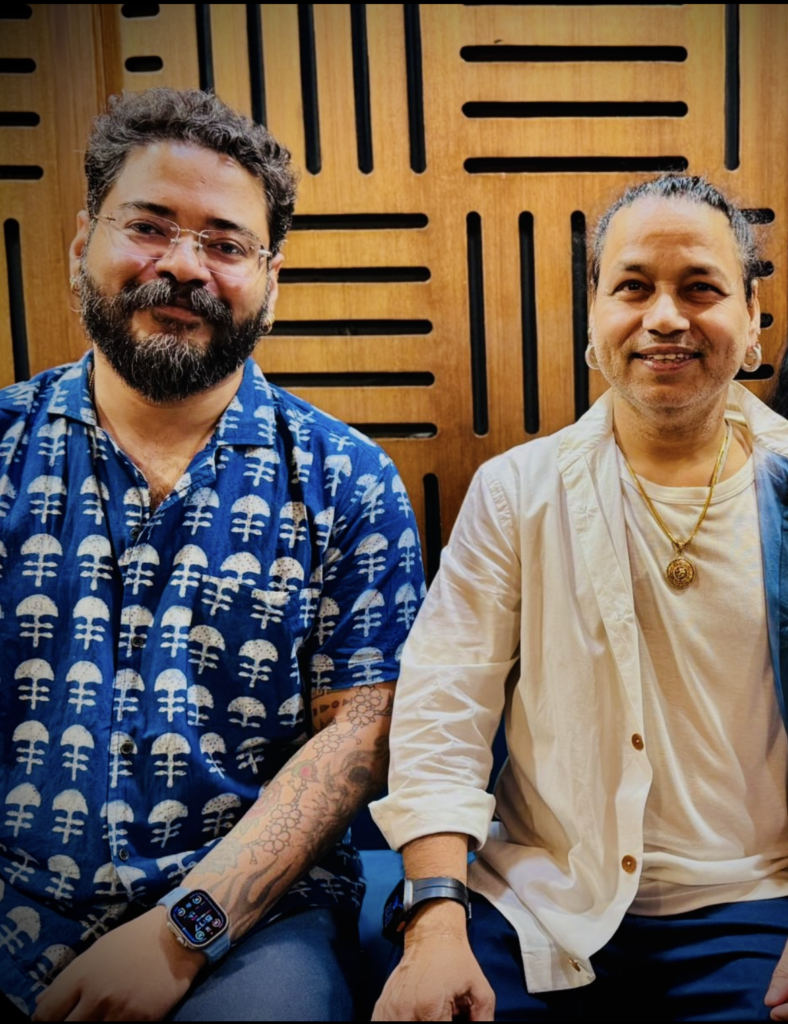
-How was your collaboration with composer Protijyoti Ghosh?
Wonderful. We have worked together on my feature film, Joon. His brilliance shone through in scoring the music of the film. His credits are also for two remarkable songs he composed , even sang one. He thinks for the film in entirety, has a fine spirit of collaboration, as much as he thinks for the songs. That’s a wonderful asset to have on one’s team and I really liked what he brought to our film Joon. For a love story , music is inseparable from the narrative.
-The film has a quasi-documentary tone, do you have any anecdotes from the filming? What was the most difficult sequence to record?
You are spot on, that’s how it began. However after two rounds of recce, research, interviews and shooting, I chose to opt for the idea of building this as a musical short.
This song was written, composed, recorded and finally produced just for this. Then we started seeking out Kailash Kher, that was a choice and we are all glad it came together.
If this were to become a documentary film, I sensed there was something laborious and clunky shaping up with talking heads. For an attention deficit climate of viewership lately, we don’t have luxury of time. It was a challenge to pack it all in three minutes.
Of what I recall is the ability to remain unseen with the camera and I stand nearly 5 feet 9 inches tall and I really stood out like a sore thumb. It was tough to shoot without having people stare into the camera. There are loads of footage in which onlookers just stand and stare. I am not complaining but that was the overall challenge to blend in and be so invisible that you are just a wallflower. You won’t see that in the film though. I found ways of vanishing.
If I miss my home too much, you’d know that with what am cooking. And one singular memory would always be of masala chai with anything shamelessly deep fried.
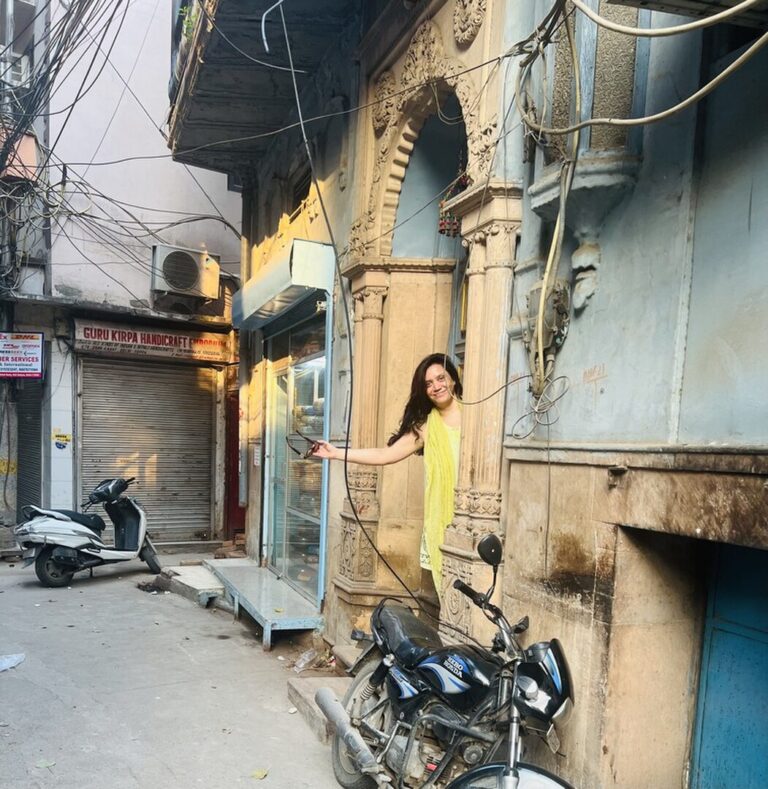
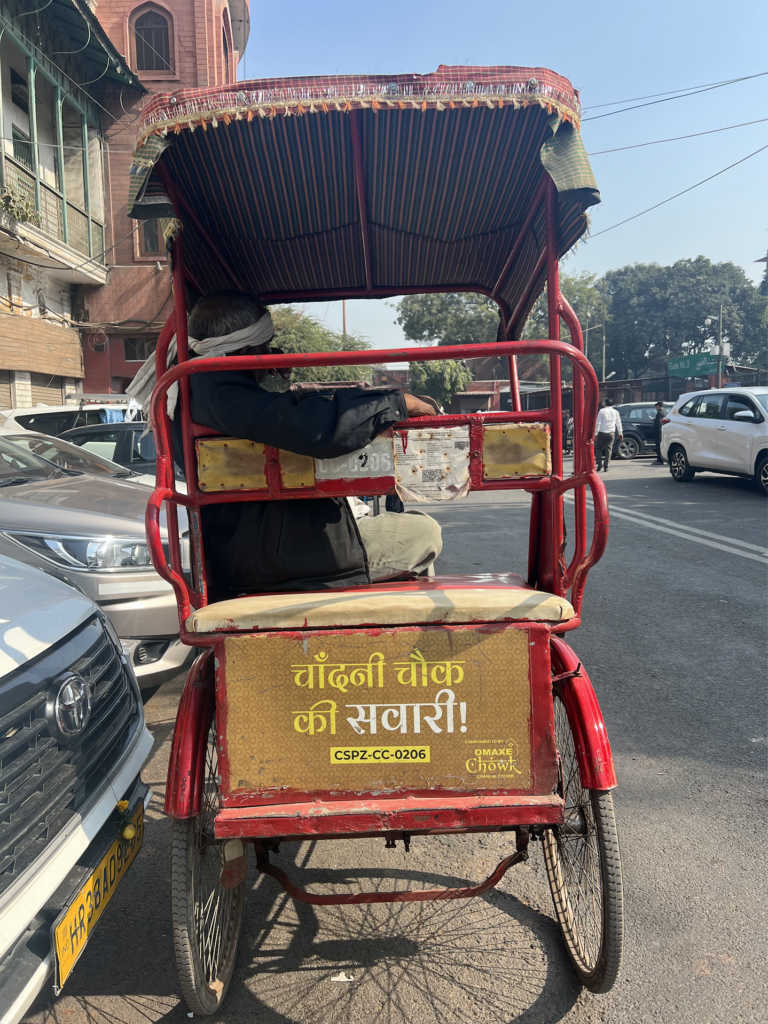
-The rear-view mirror is a simple yet evocative cinematic device in the film. What drew you to this visual metaphor for memory and longing?
It seemed a fine device to move ahead without losing out on what is behind you. Now that you mention this, you know what, my diploma film (made with 4 others) also featured the rear view mirror. Not that any of it is in here but must say two of my poems also feature rear view mirror.
So there is a motif that I keep coming back to and I wouldn’t link all of these, unless you pointed this out. Time for me to check out my other recurring motifs…
Intent , theme, images , words, mostly in this order but there is no formula. Sometimes an image can inspire to write a poem, at times a question asked by a fellow traveller began the story for my last feature film. Yeah, so that varies.
–What feeling or message do you hope to leave with the film’s ending?
In a world driven by glossy and shiny, canned and boxed, factory made and assembly line , lets take a moment to remember the hand written, handmade, the home brewed, the homemade, conversations in time. And an occasional detour to slow living amidst the frenzy of performance of everyday life.
Barnali Ray Shukla | Biography, Movies & Facts
Barnali Ray Shukla is a filmmaker, poet and writer.
Starting off as a cell-biologist specializing in plant tissue culture and a topper of the Delhi University both at graduate and post graduate level, Barnali soon turned towards film-making. Over the years, she has worked with Ram Gopal Varma, Sudhir Mishra, Ekta Kapoor. Her first feature- film as a writer-director Kucch Luv Jaisaa, was released in May 2011.
Apart from story and scriptwriting, she writes poetry and her work is on Kitaab.org, Anthology of Contemporary Indian poetry, Vayavya, Bengaluru Review, Usawa Literary Review, IndianCulturalForum, Madras Courier, The Punch Magazine, UCity Review (USA), ‘A Portrait In Blues’ (Platypus Press UK), Boundless (Singapore), Voice & Verse (Singapore).
Her short stories are up and running on OutOfPrint, Dastaan, SunflowerCollective, Kitaab.org., Centre for Stories (Australia).
In two consecutive years, 2013 and 2014 her scripts were long-listed for the SUNDANCE-Mahindra Script Lab.
Filmography : Screenwriter/ Director
FICTION
1) ‘KUCCH LUV JAISAA’ / Hindi Feature Film/ Fox Star Studios / 104 min
Streaming on Amazon Prime Video.
2) JOON / Hindi Feature Film/ Dark Chocolate Films/ 124 min
Streaming on Amazon Prime Video, India.
Streaming on BookMyShow Stream, India.
DOCUMENTARY
1) LIQUID BORDERS/ Documentary/ India / Films Division / 37min
2) ONCE UPON A SKY / Documentary / India / Dark Chocolate Films/ 76min
Now streaming on Panorama Studios YT channel.
3) ALL IS WELL/ Documentary / India / Dark Chocolate Films/ 22 min
Now streaming with iTUNES
https://itunes.apple.com/in/movie/all-is-well/id1595457599
4) I RUN INTO CHAIRS/ Documentary/ India / Dark Chocolate Films/ 22 min
Now streaming on AirTel XStream, WatchO, BingeOTT Play.
She lives in Bombay with her plants, books and a husband. When she is not doing any of the above, she goes off to trek in the Himalayas.