Menú Cerrar

Pouya Dastgiran


Interview with filmmaker Pouya Dastgiran

 
-Where did the idea for the film come from?
 
The idea for this film began from a deeply personal place. Some time ago, a filmmaker friend of mine — with whom I had previously made a short film — was looking for a strong, gripping idea for his next project. I wrote the screenplay for Boutique; but I quickly realized that the discipline I always insist on simply didn’t align with the disorganized pre-production process my friend, as director, was navigating. Rather than push the project forward under half-finished conditions, I chose to step back from the collaboration at the very start and make the film myself, on my own terms and with my own sense of structure. That decision was the true starting point of Boutique.
 

-What was it like working with cinematographer Abolfazl Esmaeili filming in a naturalistic style in Iranian markets? And what instructions did you give him for the final expressionistic images? 

Like any independent filmmaker in Iran, we faced our own particular set of challenges shooting in a public space. But from day one, what mattered most to me was complete fidelity to the screenplay and the storyboard we had designed in advance. We worked hard to strike a precise balance in the film’s narrative style — everything stayed true to what was written on the page, nothing more, nothing less. For the final sequence, I wanted the lighting to break from naturalism, with harder-edged shadows, so the space would take on a more ritualistic, interior quality. But as a whole, the film holds to a realistic, symbolically-driven narrative — we knew exactly what we were after from the very beginning.
 
As for working with Abolfazl Esmaeili, I have to say he’s a young talent — still early in his career, but remarkably creative and hungry to learn. I’m fully confident that, with time, he’ll gain invaluable experience, and a bright future awaits him.
 

-What was it like directing a veteran actor like Adel Farnoudi?

There’s a common misconception that working with experienced actors must be difficult — the assumption being that some actors, regardless of the director’s vision, insist on imposing their own interpretation. But in reality, the smartest actors are the ones who place themselves fully in the director’s hands without hesitation. Adel Farnoudi was exactly that kind of actor; he gave himself over to the filmmaking process with total commitment, and it made for one of the most rewarding collaborations I’ve had.
 

-What was the casting process like for selecting Amir Binavaei? What were you looking for in him?
Amir Binavaei has been a close friend of mine for years, and on this project, he was never just an actor to me. That friendship meant my perspective on him, from the very start, went beyond a purely professional assessment — I knew there were depths in him that might not have been obvious to others at first glance.
 
Structurally, I wanted to build a quiet kind of suspense into the story — a tension between lie and truth: was the son really as despicable as he seemed, or was the woman telling his father the truth? When I thought of Amir for the role, his straight brows and narrow eyes alone were enough to set that ambiguity in motion for the audience. But it was the moment he and Adel Farnoudi (playing the father) ran through their rapid-fire, back-and-forth dialogue that I knew, with total certainty, I’d found the right actor.

-How did you find so many committed actors to act as extras in certain sequences?

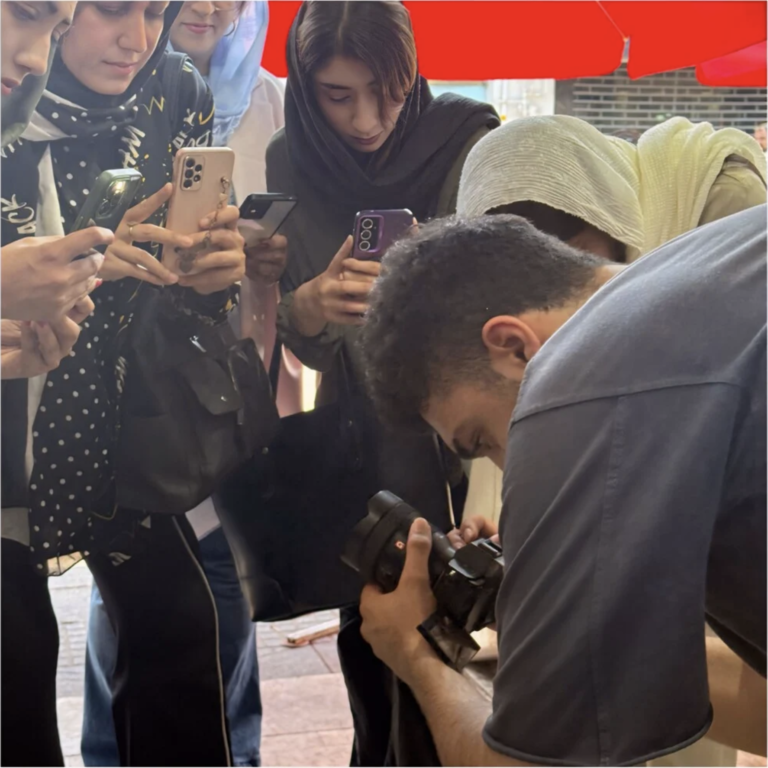
I’ve always believed in giving a chance to people who are passionate about acting, especially young people. In my view, formal training isn’t a requirement — passion, curiosity, creativity, and patience are enough. We run an arts collective called Khane Sabz (Green House), and people drawn to theater or film naturally find their way to us.
 
We welcome anyone with a genuine love for the craft, and that openness is exactly what allowed us to bring together such a dedicated, energetic group for these sequences.
 

-What was filming the father-son confrontation scene like? Was it the hardest sequence to shoot?
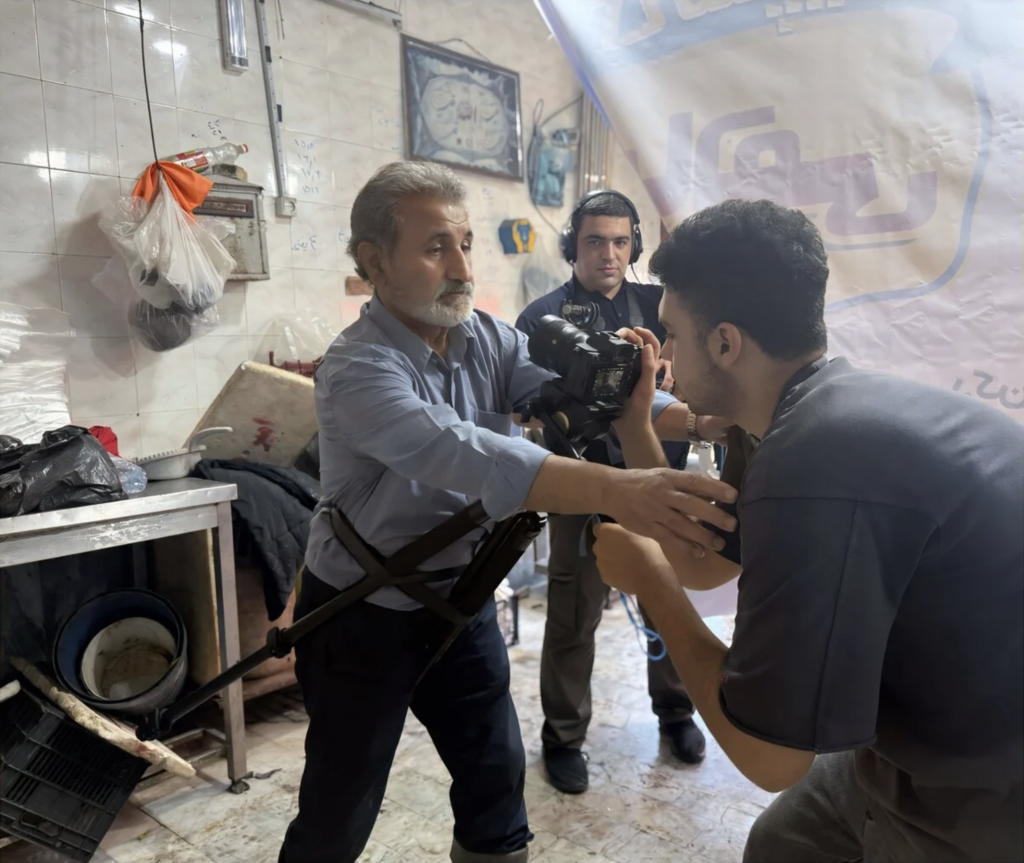
From the moment I wrote it, I knew this scene would be the emotional core of the film. The conflict between father and son starts as a verbal clash and escalates into real physical struggle — both men grabbing each other by the collar, pulling one another back and forth in the cramped space of the shop, years of pent-up anger finally breaking loose. Directing a scene like this demands an enormous amount of mutual trust — both to keep the actors physically safe, and to make sure the anger on screen felt real without ever losing control.
 
Careful choreography, repeated rehearsal before shooting, and the trust Adel Farnoudi and Amir Binavaei had in each other — and in me — is what allowed this sequence to become one of the most raw, physically honest moments in the film.
 
-Gholamreza Ramezanpour and Amir Binavaei do a great job with sound, creating a distressing atmosphere. What instructions did you give them?
 
For Boutique’s sound design, we aimed for an intelligent, layered approach: the folk piece “Varf-e Sarma” — a legacy of the late Abolhassan Khoshrou — serves as the film’s emotional and cultural anchor, alongside pieces with a more classical, Eastern character that deepen the texture of the story. We also used precise sound effects and tension-building risers to escalate pressure at key moments. My direction to the sound team was always the same: sound shouldn’t explain — it should make you feel something. It needs to unsettle the audience from within, not just fill the room. I’m genuinely proud of where that approach landed us.
 
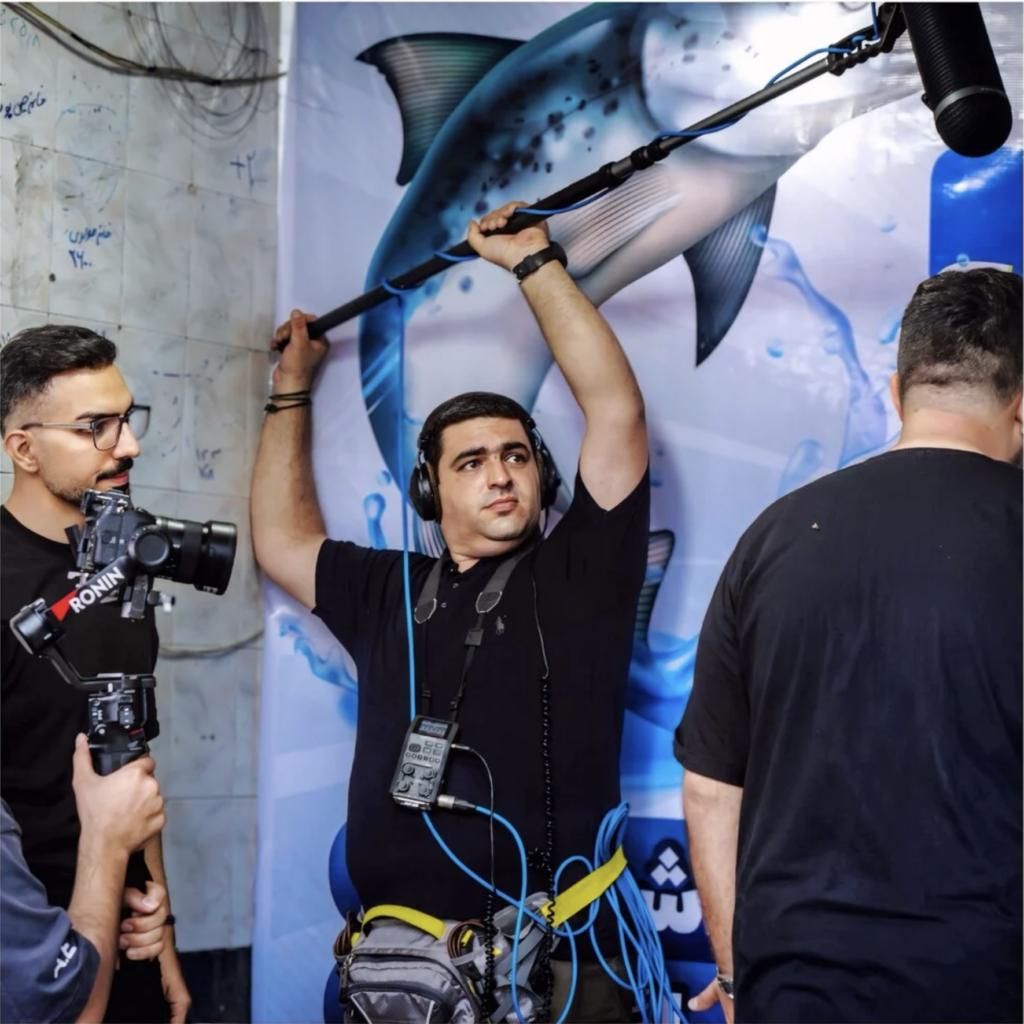
I also want to take a moment to thank my sound recordist, Gholamreza Ramazanpour, for his endless patience and meticulous, almost obsessive precision in building a believable sonic world. Working with him was one of the real strengths of this project.


-How did the idea for the final fish sequence come about? What message or experience are you trying to convey to the viewer? -Did you draw inspiration from any film for the women’s direct gazes into the camera in the final sequence?

In Boutique, the son’s father is a fishmonger, and the central conflict of the film unfolds in that very shop — in a sense, the fish becomes the catch that truth itself is hooked on.
The fish isn’t just a visual device in Boutique — it’s a symbol of release, of purification, of a kind of symbolic justice. Across many cultures and rituals, collective guilt and tension are ultimately displaced onto a creature that is then sacrificed — what’s known in psychology and literature as the “scapegoat.” In this story, the fish stands in for the patriarchal, violating system itself. The women can’t punish that system directly, but through the fish’s symbolic weight, it becomes the substitute sacrificial body, and a kind of justice is enacted through ritual.
 
The fish’s presence in that final scene also echoes something like a secular communion — a ritual that allows for moral cleansing and renewal without needing any religious framework. That’s why the ending feels both bitter and poetic at once, carrying real weight around justice and moral repair.
I wasn’t drawn from any particular film for this sequence — that image was simply the first thing that came to me, and it never changed.
 
-Peyman Dastgiran produced this project. What challenges did producing a film with this kind of social sensitivity, shot largely in public spaces, present for him — and how did he support you and the project throughout?
Peyman Dastgiran is my brother and the official head of the Khane Sabz arts collective, but our working relationship goes well beyond the typical family dynamic.
 
Producing a film like Boutique — with its sensitive social subject matter and location shooting in real, public spaces — comes with its own set of challenges: securing access to real locations, managing the tight time and resources every independent production has to contend with. Peyman handled every one of those obstacles with the calm, careful precision that defines him, never once letting his commitment to quality slip.
 
What mattered most to me as director was his unconditional trust. Peyman never interfered with a single creative decision — he always said he believed in my vision, and that trust gave me the freedom to focus entirely on building the film I had in my head, without worrying about production constraints. I’m deeply grateful to him, both as my brother and as a producer who always had my back. Boutique simply wouldn’t exist in the form you see today without his support.
 

-Is there a contemporary Iranian director you’d like to highlight?
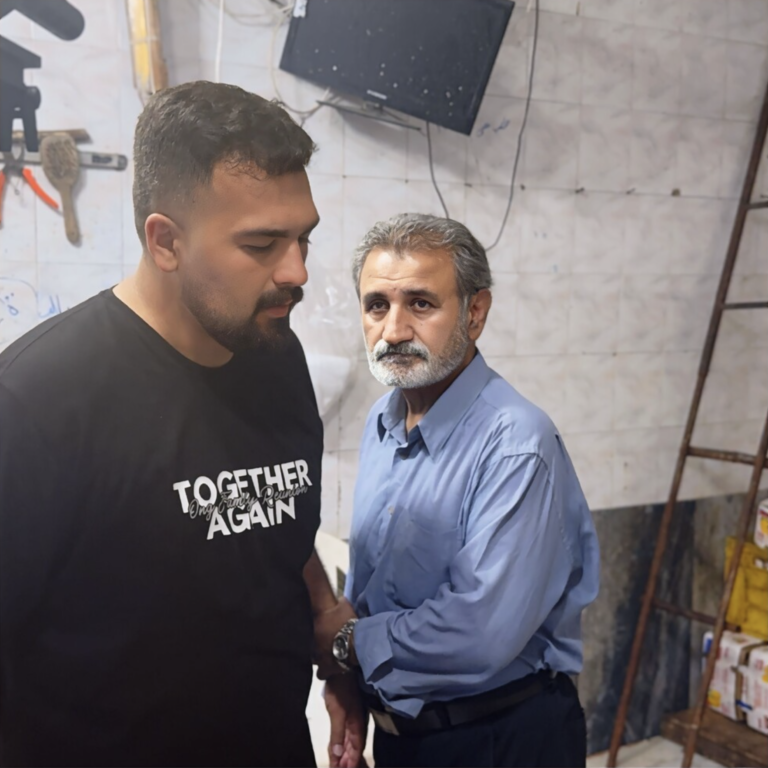
There are many directors whose work I admire, and Asghar Farhadi might stand in well as a representative of that group. But I’d like to specifically name two others: Abbas Kiarostami and Sohrab Shahid Saless. At a time when so many filmmakers are preoccupied with high-velocity action, irresistible opening hooks, cinematic tricks, and the visual language of the moment, these two carved out space for pause, for silence, for quiet observation. They’re no longer with us, but their cinema is still very much alive.


-What are your future film projects?

Right now, my mind is on my next project — one I’m hoping to begin pre-production on sometime between mid-autumn and early winter this year. It’s still too early to get into the specifics of the story. We also have a few ideas in the works with Khane Sabz, in both theater and short film. My goal has always stayed the same: to make work that, beyond the cinematic experience itself, invites the audience to reflect on the society they live in — or simply offers them a moment to pause.
 
-As a final note, what would you like to say to the readers of this interview?
 
Working in independent cinema and art in Iran comes with real, structural limitations — from the difficulty of accessing standard production resources, to the challenges of shooting in public spaces, to the absence of the kind of institutional support independent filmmakers often have in other countries. And yet, those very limitations have shaped a generation of Iranian filmmakers who’ve learned to tell their deepest stories with the fewest resources. I’m proud to belong to that generation.
What keeps me hopeful is the belief that art finds its way through, even under the hardest conditions. Boutique is a small testament to that: a film made with limited means that still managed to cross Iran’s borders and be seen — and recognized — at international festivals. To me, that’s proof that the voice of Iranian cinema will be heard, no matter how difficult the circumstances. And as long as we have stories left to tell, we’ll keep telling them.


Pouya Dastgiran | Biography, Movies & Facts

 
Full Name: Pouya Dastgiran

Nationality: Iranian
Date of Birth: August 8, 1996
Education: B.A. in Directing
Profession: Actor, Writer, Director
Years of Experience: 18 years in theatre, cinema, and television
Head of the official theater group “Khaneh Sabz” (Green House) in Qaemshahr, Iran – Reg. No 11119586

Holder of Acting, Writing, and Directing Certificates from the Future-Makers Iranian Cinema Institute

Recipient of an International Certificate from Brusov State University, Yerevan, Armenia

Film Work

Director:
• Boutique (short film, 2025)

Co-writer & Creative Consultant:
• The Yawn of an Unknown Cloud (short film)

Actor:
• Play (short film)

Published Short Stories

• Seasonal Salad – Atrân Publishing
• Aghdas Doesn’t Like Lentils – Atrân Publishing
• Long-Grain Rice – Atrân Publishing
• The Era of Lead Poppies – Arena Publishing

Screenplays (Written &/or Published)

• The Yawn of an Unknown Cloud – Published by Atrân
• The Landlord – Published by Atrân
• The Bathhouse – (Unpublished)

Stage Acting (Selected Plays)

• Ahou / The Village of Friendship / A Woman Behind the Door‌ / The Harassment / mareke dar mareke / Baregheye khishtan

Theater Directing (Selected Credits)

• Caligula / Five Figures / mareke dar mareke / The Story of the Panda Bears / Crimes of Passion/ The Lady and Her Youth / The Waiting Room / You Are Beside Me, But… / Baregheye khishtan / Mina and the Leopard / Just That / Yerma

Email: pouyadastgiran0123@gmail.com
Instagram: pouya_dastgiran

 
BOUTIQUE SHORT MOVIE INFORMATION